
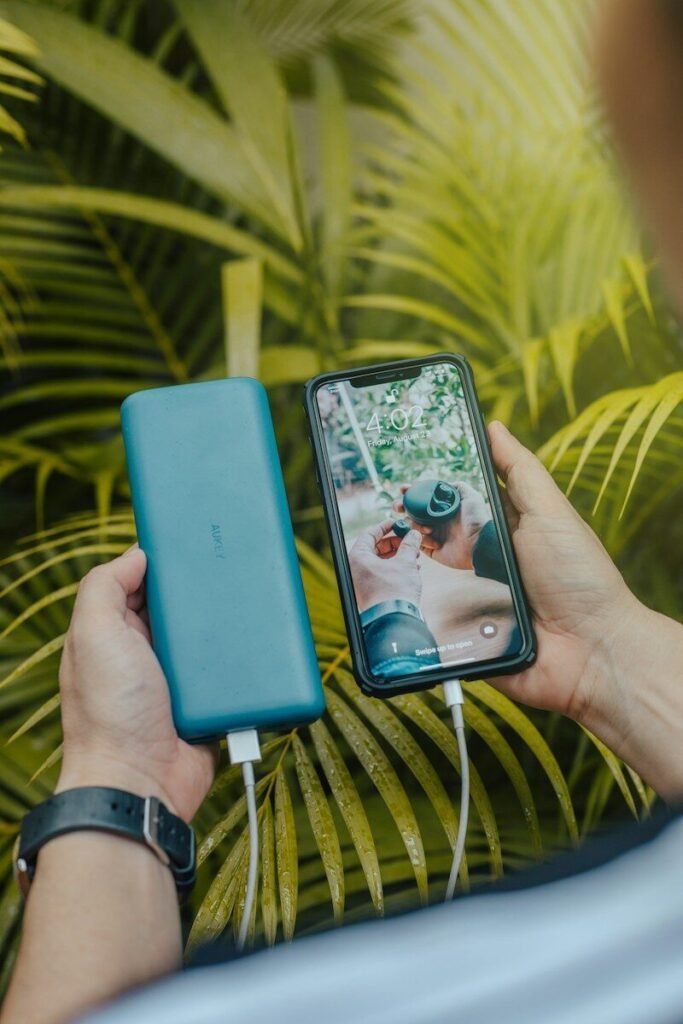
A dead phone at the wrong moment is a modern minor disaster, and portable power banks are the simple insurance against it. But shopping for one is confusing: milliamp-hours, watt ratings, USB-C PD, GaN — the numbers on the box do not always mean what buyers think they mean. This guide explains power banks in plain language: how capacity really works, what charging speed you need, which safety features matter, and how to pick the right one without overpaying.
Capacity: What mAh Actually Tells You
Capacity is measured in milliamp-hours (mAh), and bigger numbers mean more stored energy. But the number on the box is the capacity of the internal battery cells, not how much energy reaches your phone — conversion losses and voltage differences mean you get roughly 60 to 70 percent of the rated capacity in practice.
The practical math
A 10,000 mAh power bank delivers roughly one and a half to two full charges to a typical modern smartphone. A 20,000 mAh bank roughly doubles that. For phones alone, 10,000 mAh is the sweet spot of size and usefulness; for tablets and laptops, look at 20,000 mAh and above with higher wattage output.
Why bigger is not always better
Capacity adds weight and bulk — a 20,000 mAh brick is noticeably heavier in a pocket or small bag. Airlines also limit battery capacity in carry-on luggage, with common thresholds that make very large banks awkward for frequent flyers. Match the capacity to your real usage: daily top-ups need less than multi-day trips off the grid.
Charging Speed: Watts, PD, and Fast Charging
Speed matters as much as capacity. A power bank that trickles out power will technically charge your phone, but you will wait hours. Modern fast charging revolves around USB-C Power Delivery (PD), a standard that negotiates higher power between the bank and your device.
How many watts do you need?
For phones, 18 to 30 watts covers fast charging for most models. For tablets, 30 to 45 watts is comfortable. For USB-C laptops, 45 to 65 watts or more is the target — below that, the laptop may charge slowly or merely hold its charge. Check what your devices support; buying more watts than your devices can accept is harmless but wasted money.
Cables matter as much as the bank
A fast power bank paired with a cheap thin cable will charge slowly, because the cable cannot safely carry the current. Use a quality USB-C cable rated for the wattage you want — the cable is part of the charging system, not an afterthought. Short, thick cables also lose less energy than long, thin ones.
Recharging the power bank itself
Do not forget the other direction: a big power bank that takes all night to refill is annoying. Look for banks that support fast input charging, so a 20,000 mAh unit can refill in a few hours rather than overnight. Some models recharge via the same USB-C port they output from, which means one less cable to carry.
Ports and Compatibility
Modern power banks center on USB-C, often with one or two USB-A ports for older devices. More ports let you charge a phone and earbuds simultaneously, but total output is shared — charging two devices at once splits the available watts. Check that the bank supports the charging protocols your devices use; most handle the common standards, but some phones use proprietary fast-charging that only works at full speed with matching chargers.
Pass-through charging
Some power banks can charge your devices while being charged themselves — handy for hotel nights with one free outlet. Not all models support this safely, so check the specs rather than assuming.
Safety: What Separates Good Banks From Fire Hazards
Power banks pack a lot of energy into a small package, so safety engineering matters. Reputable banks include multiple protection circuits: overcharge, over-discharge, over-current, short-circuit, and temperature protection. These are invisible until the day they matter.
Certifications worth looking for
Look for recognized safety certifications on the packaging or listing, such as UL, CE, or equivalent marks for your region. Established brands submit their products for independent testing; no-name listings that skip certifications are gambling with the odds. Airline-safe labeling and clear capacity markings in watt-hours are good signs of a legitimate product.
Heat, swelling, and when to retire a bank
A power bank that gets unusually hot, swells, or charges erratically should be retired immediately — these are warning signs of battery failure. Do not puncture or crush lithium batteries, and recycle old banks through proper e-waste channels rather than household trash. Heat is also a performance clue: excessive warmth during normal use suggests poor efficiency.
Size, Weight, and Everyday Carry
The best power bank is the one you actually carry. Slim 5,000 to 10,000 mAh banks slip into a pocket and cover the most common emergency — a phone dying midday. Larger banks belong in a bag for travel days. Consider the shape too: flat banks stack well in bags, while some compact models include built-in cables or folding plugs that eliminate accessories.
Extra features worth having
A clear battery percentage display beats vague blinking dots — you will actually know when to recharge the bank. Built-in cables are convenient but become a liability if they fray, so detachable-cable designs age better. Low-current modes for charging earbuds and smartwatches prevent tiny devices from being overwhelmed.
How to Choose: Three Common Buyers
The commuter wants a slim 10,000 mAh bank with 20W-plus USB-C output — light enough to carry daily, fast enough to matter. The traveler wants 20,000 mAh with 45W-plus output and fast recharging, to cover phones, tablets, and headphones across long days. The laptop user needs high-wattage USB-C PD output matched to their machine, and should verify the bank can sustain that wattage rather than just peak at it.
The Bottom Line
Buy for your real devices and real habits: enough capacity for a day or a trip, enough watts for your hungriest device, a quality cable to match, and a reputable brand with proper safety certifications. A good power bank is boring in the best way — it sits in your bag for months and saves the day exactly when needed.
Frequently Asked Questions
How many times will a 10,000 mAh bank charge my phone?
Roughly one and a half to two full charges for a typical modern smartphone, after accounting for conversion losses. Larger phones with bigger batteries get fewer charges; smaller ones get more.
Can I take a power bank on a plane?
Yes, in carry-on luggage — never in checked bags. Airlines set capacity limits, commonly around 100 watt-hours without approval, so check your bank’s Wh rating and your airline’s rules before flying.
Do power banks lose charge sitting in a drawer?
Yes, slowly. Lithium batteries self-discharge over weeks and months. Top up a stored power bank every few months so it is ready when you need it.
Is it safe to leave a power bank charging overnight?
Quality banks with overcharge protection handle it fine, but it is still good practice to unplug once full. Never charge a damaged, swollen, or overheating bank.
Why does my phone charge slowly from my power bank?
The usual culprits are a low-wattage bank, a cheap cable that cannot carry fast-charging current, or a protocol mismatch between the bank and the phone. Match the bank’s output, the cable rating, and your phone’s supported standard.