
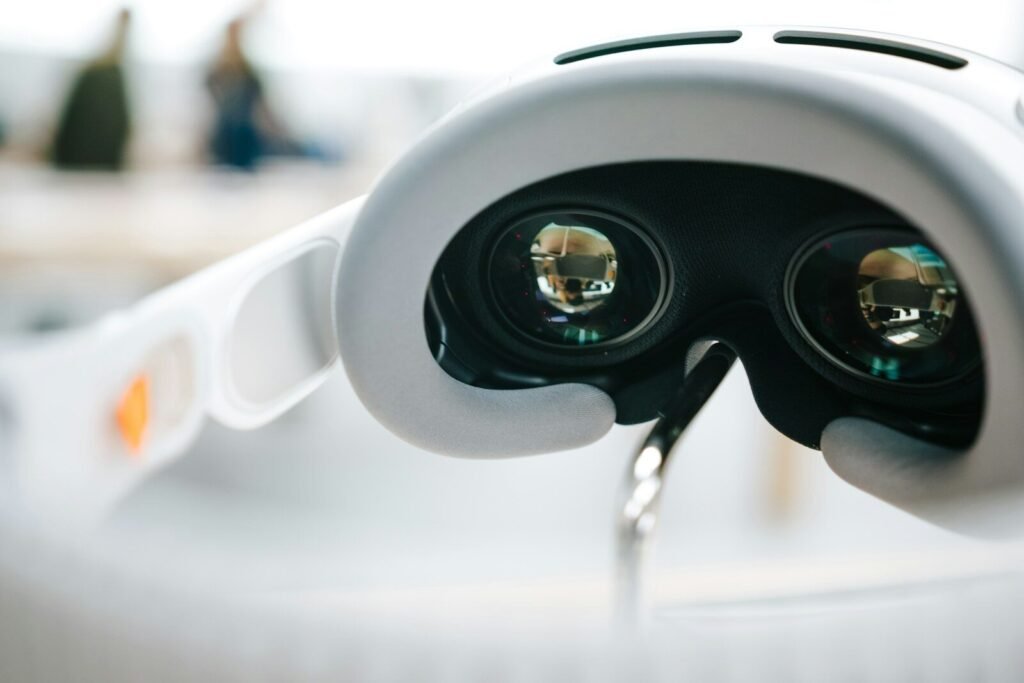
After years of false starts, augmented reality glasses are finally getting good — and small enough to wear in public. Tech’s biggest companies are betting that AR glasses will be the next major computing platform after the smartphone. Here is what AR glasses can actually do today, what is coming next, and whether you should care yet.
What AR Glasses Actually Are
AR glasses overlay digital information on your view of the real world: directions floating on the street ahead of you, live translations under the person speaking, notifications hovering at the edge of your vision. Unlike VR headsets, which replace reality, AR glasses add to it — you stay present in the world while digital layers assist you.
Today’s market splits into a few categories. AI smart glasses (like Meta’s Ray-Bans) look like normal glasses with a camera, speakers, and an AI assistant — no display, but surprisingly useful. Display glasses add a small projected screen for notifications, navigation, and captions. Full AR headsets offer immersive holograms but remain bulky and expensive. The trajectory is clear: everything is converging toward normal-looking glasses with rich displays.
It is worth distinguishing the marketing from the merchandise. Many products sold as “AR glasses” today are really just AI smart glasses with no display at all — useful, but not augmented reality in the full sense. True AR means digital content anchored to the physical world: a virtual arrow painted on the actual road, a translation label stuck to a real sign. That full experience exists, but only in bulky or expensive hardware so far.
What They Can Do Well Right Now
An AI assistant on your face
The killer app of current smart glasses is hands-free AI: ask a question, get an answer in your ear, take a photo or video of what you are looking at, get live translation of a conversation. For travelers, parents with full hands, and anyone who hates pulling out their phone, this is genuinely useful today.
The “look and ask” capability is the sleeper feature: point your gaze at a menu, a landmark, a plant, or a broken appliance, and ask the AI what you are seeing. Multimodal AI models make this feel almost magical — the glasses become a universal explainer for the physical world. It is the closest thing yet to the sci-fi promise of instant knowledge about anything you encounter.
Navigation and real-time information
Display glasses can float turn-by-turn directions in your line of sight — no more glancing at your phone while walking or cycling. Early versions also offer live captioning of conversations (a genuine accessibility win for people with hearing loss), real-time translation overlays, and contextual information about what you are looking at.
For cyclists and motorcyclists in particular, heads-up navigation is a safety upgrade: keeping your eyes on the road while still getting directions. Expect this to be one of the first use cases that pulls mainstream buyers in, since the benefit is obvious and immediate.
Capturing the moment
The first-person camera in smart glasses has quietly become many owners’ favorite feature: capturing a child’s first steps, a stunning view, or a cooking technique without fumbling for a phone. The footage has an immediacy that phone video lacks, because the camera sees what you see. Creators were early adopters, but ordinary users are discovering it too.
Work and specialized uses
In warehouses, factories, and field service, AR glasses already show workers instructions, schematics, and remote-expert video feeds without tying up their hands. These enterprise uses are the quiet success story of AR — less glamorous than consumer holograms, but real and growing. Surgeons, technicians, and inspectors use specialized AR headsets today for tasks where hands-free information genuinely improves outcomes.
The Hard Problems Being Solved
Battery life and heat
Glasses are tiny; batteries are physics. All-day AR in a normal-looking frame remains the industry’s hardest engineering challenge. Current solutions split the work: glasses handle display and sensors while a phone does the heavy computing. True standalone all-day AR glasses are still ahead of us.
The trade-off is brutal: a bigger battery means heavier glasses, and heavy glasses hurt. Every gram matters when something sits on your nose all day. Expect incremental gains — better chips, more efficient displays — rather than a sudden breakthrough.
Displays that work in sunlight
Projecting a bright, sharp image onto a transparent lens that also works outdoors has taken decades of optics research. Waveguide displays — the leading approach — are finally reaching acceptable brightness and field of view, but there is still a visible gap between demo videos and real-world performance. MicroLED is the most promising display technology for the job, and it is maturing fast.
Social acceptance
Google Glass taught the industry a painful lesson: people do not want to feel recorded. Modern AR glasses face the same trust challenge — cameras on faces make bystanders nervous. Solutions include obvious recording indicator lights, social norms that are still forming, and designs that look like ordinary eyewear rather than gadgets. The companies that win this category will be the ones that make the technology socially invisible.
Privacy
Glasses with always-on cameras and microphones raise serious privacy questions: who sees the footage, how long is it stored, and what stops misuse? Regulation is starting to catch up, but the technology is ahead of the rules — a theme familiar from every recent tech wave. Expect this to become one of the defining policy debates of the AR era, alongside facial recognition concerns.
What to Expect in the Next Few Years
The near-term roadmap is fairly clear: AI smart glasses get better displays (first monochrome, then color), battery life creeps up, prices come down, and prescription lenses become standard options. Expect your glasses to become a genuine phone companion — handling notifications, calls, navigation, and quick AI queries — before they replace the phone.
Competition is heating up, which is good for buyers: multiple tech giants and startups are now shipping or developing glasses, and each generation is visibly better than the last. The pace of improvement in AI assistants — the software brains of these glasses — is arguably faster than the hardware progress, and it makes every existing pair of glasses more capable over time through updates.
The bigger vision — full holographic AR that blends virtual objects seamlessly into your world — needs breakthroughs in displays, batteries, and miniaturization that are probably years away. Treat the most spectacular demos as previews of the 2030s, not products.
Should You Buy AR Glasses Now?
Buy now if…
You want a hands-free camera and AI assistant, you travel frequently (translation features are excellent), or you are a developer or enthusiast who enjoys early tech. Current AI smart glasses are mature enough to be genuinely useful daily devices for the right person.
Wait if…
You want a full AR display experience, all-day battery, or prescription integration at a reasonable price — the display glasses worth buying are still one or two generations away. Also wait if the camera-privacy question bothers you; norms and regulations are still settling.
What to look for when you do buy
Prioritize comfort and weight (you will feel every gram), display brightness and field of view, battery life in real use, the quality of the AI assistant, and — critically — the privacy controls: recording indicators, easy-off switches, and clear data policies. Also check ecosystem fit: glasses work best when they integrate smoothly with the phone and services you already use.
The Bigger Picture
AR glasses matter because they represent a shift in computing’s center of gravity: from screens you look at to information woven into the world you look through. If the industry gets it right, the phone becomes the computer in your pocket while the glasses become its display — always available, never demanding your full attention. That is a genuinely different relationship with technology: more ambient, less addictive by design. Whether that promise survives contact with advertising business models is the open question.
There is also a deeper reason to pay attention: whoever controls the AR glasses platform controls a new layer of reality — what information you see, what gets highlighted or hidden, and who can reach your attention. The stakes of getting the business model and governance right are higher than they look. The smartphone era taught us that platforms shape societies; the AR era will test whether we learned anything from it.
Frequently Asked Questions
Are AR glasses the same as VR headsets?
No. VR headsets (like the Quest) replace your view with a virtual world; AR glasses overlay digital information on the real world. They are converging — some headsets do both — but glasses you can wear outside are a different product category with different trade-offs.
Do AR glasses work with prescription lenses?
Increasingly, yes. Most major smart glasses now offer prescription options, though they add cost and can complicate the optics. If you wear glasses, check prescription support before buying — it is a make-or-break feature.
Can people tell when you are recording with smart glasses?
Current models include a visible indicator light that turns on during recording, and most require deliberate activation. But norms are still forming, and you should always respect local laws and basic courtesy about recording people.
Will AR glasses replace smartphones?
Not soon. For the foreseeable future, glasses are a companion to the phone, which provides computing power, connectivity, and battery. A full replacement would need breakthroughs in miniaturization that are years away.
What is the best use of AR glasses today?
Hands-free AI assistance: asking questions, taking photos and videos of what you see, live translation, and navigation prompts. These are the features current owners actually use daily — the holographic future is still in development.